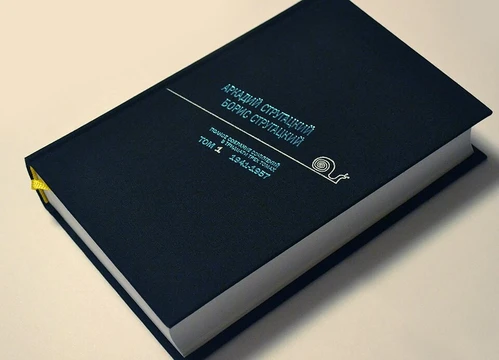
The Ugly Swans
A censored Soviet sci-fi novel about genetic future and youth rebellion.
The Ugly Swans (Russian: Гадкие лебеди) is a science fiction novel by Soviet writers Arkady and Boris Strugatsky. It was written between 1966 and 1967 for the Soviet literary magazine Molodaya Gvardiya, but censors blocked its publication because of its strong political and free-thinking themes. The novel spread through samizdat and was printed abroad without the authors’ consent in 1972 in West Germany. It finally appeared in the USSR in 1987, in the Latvian magazine Daugava, under the title “The Time of Rains.”
The story is set in an unnamed town in a vaguely authoritarian country where rain never stops. The protagonist, Victor Banev, is a middle-aged, heavy-drinking writer who returns to his childhood town from the capital. He becomes caught up in strange events involving the “slimies” or “four-eyes”—people disfigured by a “yellow leprosy” that leaves yellow rings around their eyes. These outcasts live in a former leper colony. The town’s adults fear them, blaming them for all misfortunes, but the local teenagers, including Banev’s daughter Irma, adore them. A boy named Bol-Kunats, Irma’s friend, invites Banev to a school meeting, where he is shocked by the teenagers’ extraordinary intelligence and cynical worldview; they appear as superhuman geniuses who despise the corrupt adult world. Banev discusses the slimies with Diana, the leprosarium’s chief doctor Yul Golem, a drunken artist named Ram Quadriga, and sanitary inspector Pavor Summan. He dislikes the mayor, who backs local fascist thugs, and the military guarding the slimies. Golem explains that the slimies’ genetic condition represents humanity’s future—a new, intellectually and morally superior human type. Events escalate: Banev learns that Summan works for counterintelligence and, discovering Summan kidnapped and killed a slimy, reports him to the military out of spite. The town’s children leave their homes for the leper colony. The adults are seized by overwhelming terror and flee. Once everyone has left, the rain stops. Golem departs last. Banev and Diana enter the now-sunlit city, where they see Irma and Bol-Kunats, who have aged a day and appear happy. Banev thinks to himself, “All this is nice and fine, but I mustn’t forget to return.”
The novel shares ideas with later works by the Strugatskys, including *The Second Invasion from Mars*, *Roadside Picnic* (a non-standard alien invasion), an
- Authors
- Arkady and Boris Strugatsky
- Written
- 1966–1967
- First USSR publication
- 1987
- Field
- Science fiction
- Nationality
- Soviet
- Known for
- Political and free-thought overtones; samizdat circulation
Lore & Background
The novel is set in an uncertain mildly-authoritarian country, in an unnamed town where rain never stops. The protagonist, Victor Banev, a middle-aged heavy-drinking writer, returns to his childhood town and encounters 'slimies' or 'four-eyes'—people suffering from a disfiguring yellow leprosy who live in a former leper colony. The town's adults fear them, but the teenagers, including Banev's daughter Irma, adore them. Banev is shocked by the teenagers' superhuman intelligence and disillusioned worldview. The head doctor of the leprosarium, Yul Golem, reveals that the slimies' genetic disease represents the future of humanity—a new, intellectually and morally superior genetic type.
Reader's Guide
The Ugly Swans is significant as a work of Soviet science fiction that challenged censorship through its political and free-thought themes. Its circulation in samizdat and unauthorized publication abroad highlight the Strugatsky brothers' role in dissident literature. The novel shares ideas with later works like Roadside Picnic and The Time Wanderers, and its 2006 loose film adaptation by Konstantin Lopushansky extends its cultural reach. The prototype of Victor Banev is a generalized image of the Bard, including figures like Alexander Galich and Vladimir Vysotsky, whose song appears in the story. The novel's exploration of a genetically superior future generation and the exodus of adults from a rain-soaked town leaves a lasting impression on discussions of utopia and dystopia.
Did You Know?
- The novel was originally titled 'The Time of Rains' when published in the USSR in 1987.
- The slimies are described as suffering from 'yellow leprosy' manifesting as yellow circles around the eyes.
- Boris Strugatsky confirmed that the slimies came from the future and returned to the past to change it.
- The names of many characters, such as Pavor Summan and Yul Golem, are borrowed from classical mythologies.
Frequently Asked Questions
What is 'The Ugly Swans' and who wrote it?
It is a science fiction novel by the Soviet brothers Arkady and Boris Strugatsky, drafted in 1966–67 for the magazine Molodaya Gvardiya. Soviet censors blocked its release, so it circulated through samizdat and was printed in West Germany in 1972 before the authors ever saw it in print; it finally appeared inside the USSR in 1987 under the alternate title 'The Time of Rains.'
What is the basic plot of 'The Ugly Swans'?
The novel is set in an unnamed, repressive town where a new generation of young people is treated as deformed or 'ugly' by the authoritarian establishment. Their physical and ideological difference from the previous generation is framed as an inevitable biological and social transformation that the old order cannot suppress.
Why was the novel banned in the Soviet Union?
Censors judged its depiction of a youth generation openly defying an oppressive state to be a direct attack on the existing political system. The book's insistence on free thought and the right of the young to reshape society made it unacceptable for official publication throughout the 1970s and into the 1980s.
What does the title 'The Ugly Swans' symbolize?
The phrase deliberately inverts the classic swan image to argue that what the present calls ugly or broken is actually a new generation still in its awkward, formative stage. It captures the Strugatskys' core idea that the youth are not a defect but a coming beauty the old guard simply refuses to recognize.
How does 'The Ugly Swans' fit into the Strugatskys' broader canon?
It is one of their earliest novels and their most overtly political, predating better-known works like 'Roadside Picnic' and 'Monday Begins on Saturday.' Its long censorship history turned it into a touchstone for Soviet dissident readers who first encountered it through underground samizdat copies.
More in Novels by Arkady and Boris Strugatsky 1-18
Spotted an error? Know more?
This is a living reference — every entry is fact-audited, and reader corrections feed straight into our audit queue. Suggest an edit · See this site's audit record